
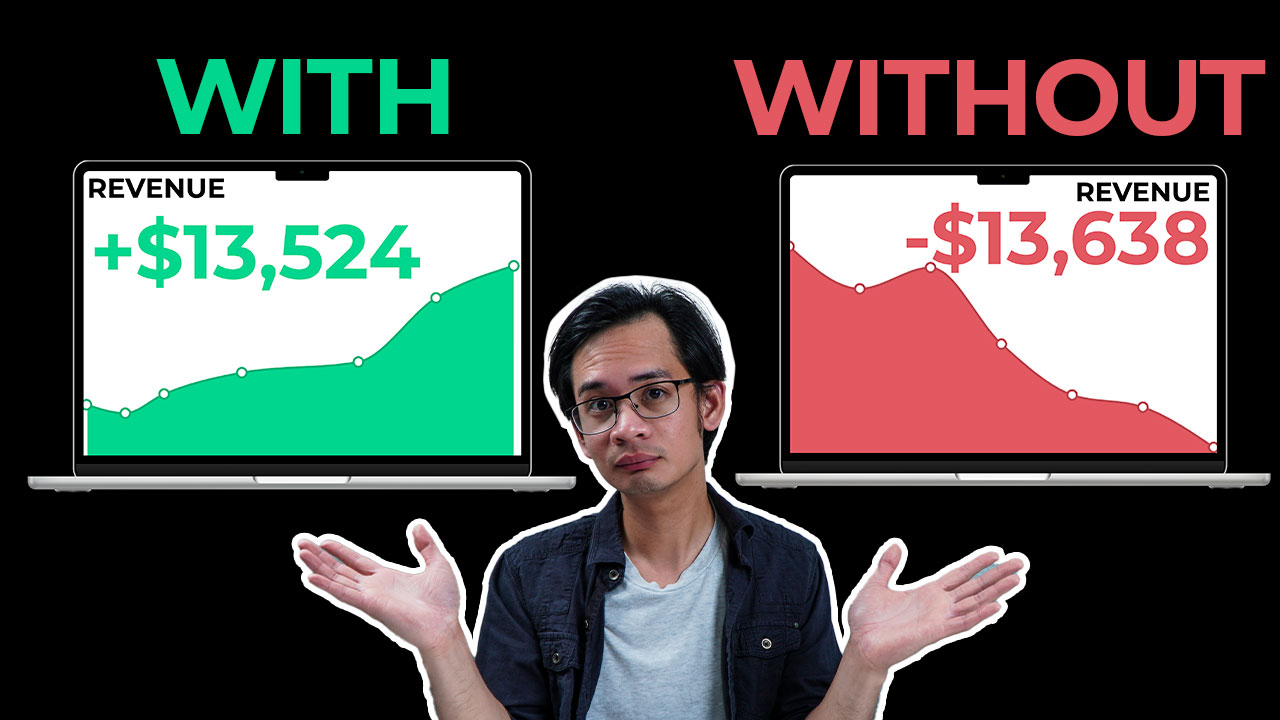
We live in the digital age, so if you think your business doesn’t need a website, you’re missing out on many business opportunities. Simply put, you’re leaving money on the table.
So, the short answer is YES! Your small business needs a website.
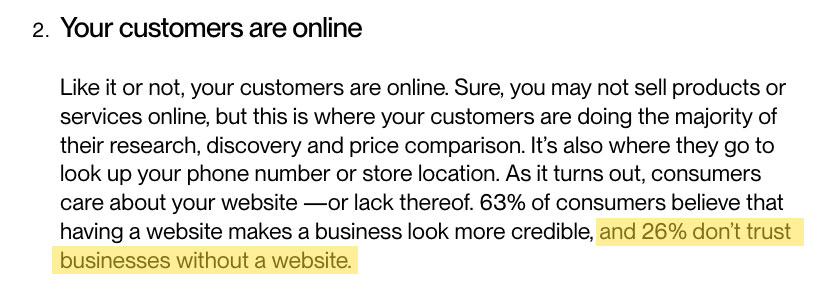
In fact, according to CIRA, 26% of consumers won’t trust your business if it doesn’t have a website. That’s a substantial percentage to ignore.
These are the 7 irrefutable reasons that answers the question, “why do i need a website?”
What to expect?
Prefer to watch a video?

1. You’ll get more eyeballs on your business.
According to Semrush, 77% of consumers will ask Google when looking for local business information.
Let’s do a quick math:
My city has a population of a little over 100,000. And let’s say they could all be your potential customers*. Without an online presence, 77,000 won’t even know you exist.
*Just an example, I still agree with the philosophy of, “if you sell to everyone, you sell to no one.”
Here’s the good news:
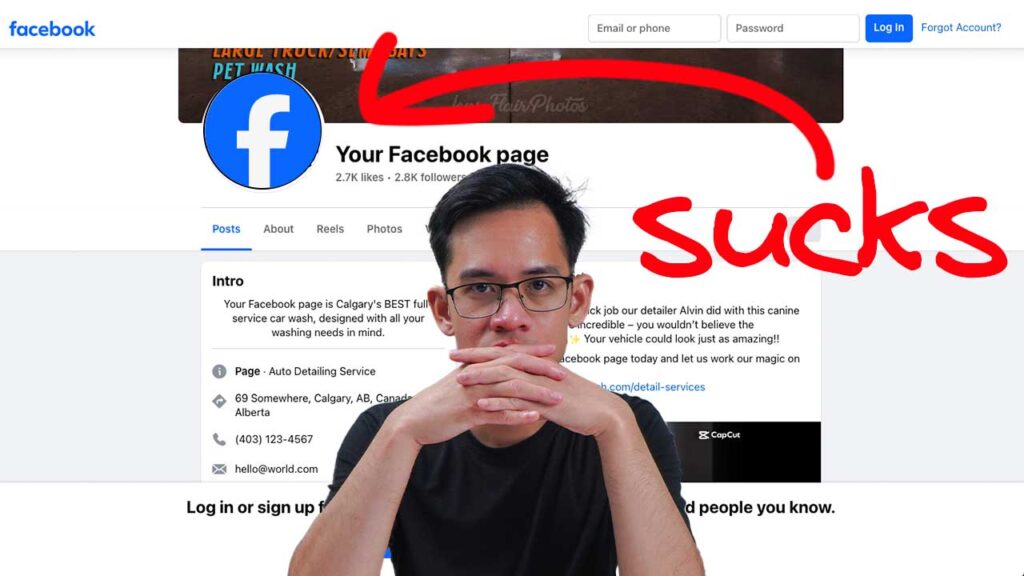
Your online presence includes more than just your website; it also includes your social media pages like Facebook and Google business profiles. However, ranking on Google for a more competitive keyword is simply not possible, or at the very least, absolutely challenging, without a website.
Besides, if you think about it:
Wouldn’t showing up more than once on Google be better for your business? More eyes equals more clients/customers, and I’d say more chances of winning.
Thus, create that Google business profile, have social media pages, and, more importantly, invest in a website.

2. A website can help you convey trust & credibility.
According to CIRA, 63% of consumers will see your business as more credible if you have a website.
Think about it:
If you’re cheap with your business, how can they trust that you aren’t cheap with your products or services?
By having a good web design!
Even if your website has a templated and repetitive design, it’s better than nothing.
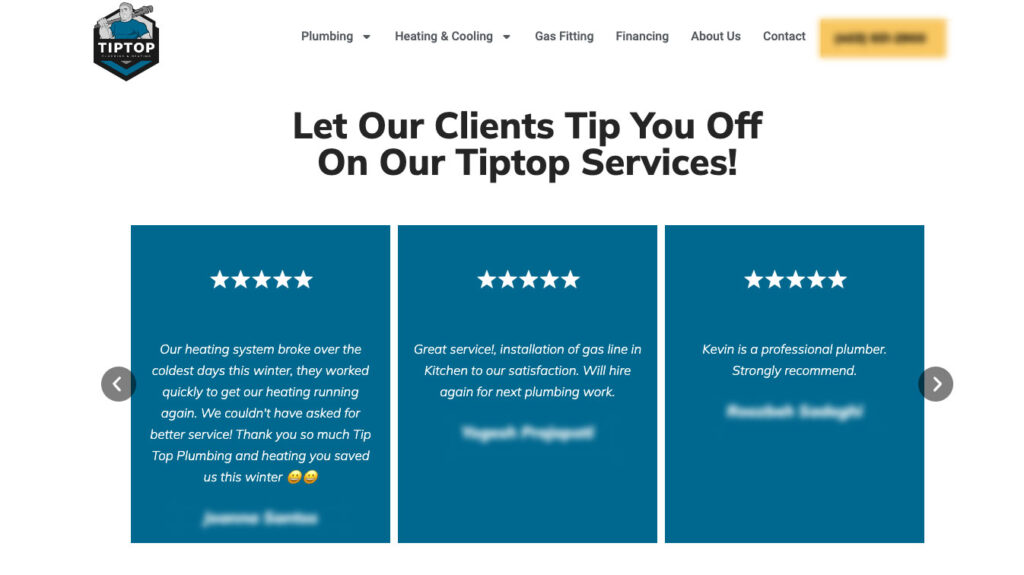
Your website should handle any possible objections and suspicions before they decide to buy from you. That said, your website should have reviews, pictures, and other proof that you’re a real business and that you provide excellent services/products.
3. You’ll have a 24/7 digital salesperson.
A website works tirelessly for your business, with no days off or breaks.
Imagine this:
It’s the weekend; you’re enjoying a BBQ with your family and friends. But people can still buy from your business or book appointments while you’re enjoying your day off!
That’s how beneficial a website can be for your business.
Also, this is where the power of a booking form on your website comes into play.
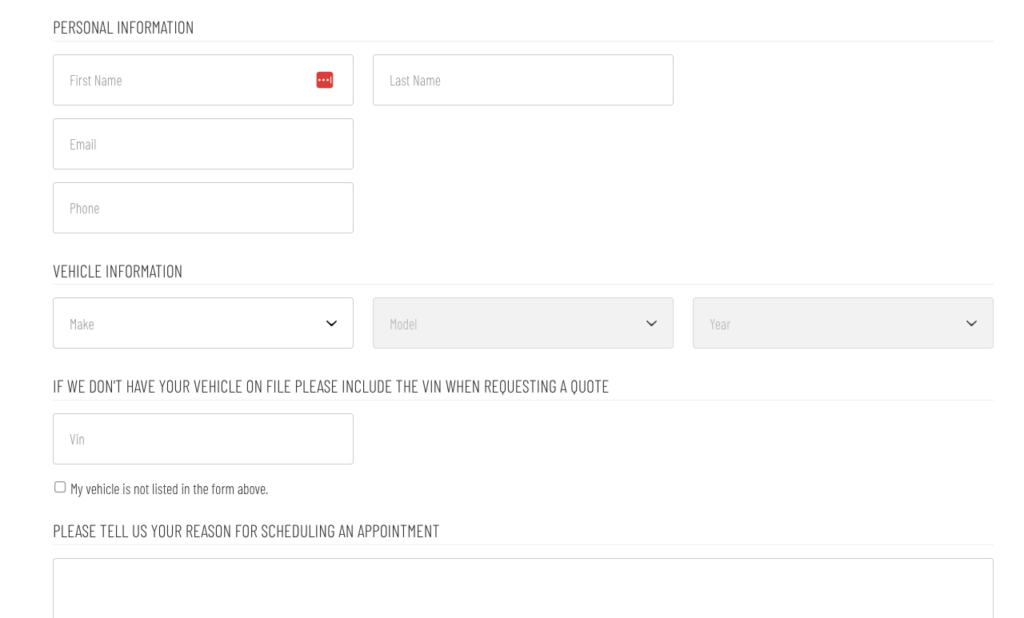
I recently had an experience with an auto shop that perfectly demonstrates this. As an introvert, I appreciated that my interaction with the shop employees was minimal.
I learned about their services through their website and scheduled an appointment online. The only thing they needed to do was confirm the booking when they returned to the office.
In other words, they managed to “sell” their service to me with almost zero effort.
The same principle applies if you sell products. Customers can place orders on your e-commerce store anytime, and you can fulfill those orders during working hours.
Better yet?
A well-designed website with compelling messaging and a user-friendly layout can significantly boost your conversions and make the most of your 24/7 digital salesperson.
If you want to maximize conversions, switch to a custom website tailored to your business.
Book a Meeting Today!4. Your potential clients/customers can quickly learn more about your business.
Owning a website gives you complete control over the information you share with your customers and clients. This is crucial because a well-designed layout allows you to present information to enhance conversions—something not achievable with a social media page.
Displaying Reviews and Testimonials
One significant advantage of having your own website is the ability to choose which reviews and testimonials to display.
NEVER add fake reviews. Authenticity is critical, and fake reviews can do more harm than good.
In any case, let’s use Google reviews as an example.
Google reviews often provide a general overview of your business, which is undoubtedly a good thing.
However, specific reviews about particular services or products can be more persuasive for potential clients or customers looking for those offerings.

More importantly, you can choose a more in-depth review than something like, “Good job!” Which undoubtedly helps, but not as much as descriptive testimonials.
To sum up, showing the best and most relevant reviews helps nudge potential clients toward making a purchase.
Providing Essential Information
Your website can also streamline your operations by offering essential information to your visitors. For instance, if you frequently receive calls with the same questions, adding a FAQ section can reduce the number of repetitive inquiries.
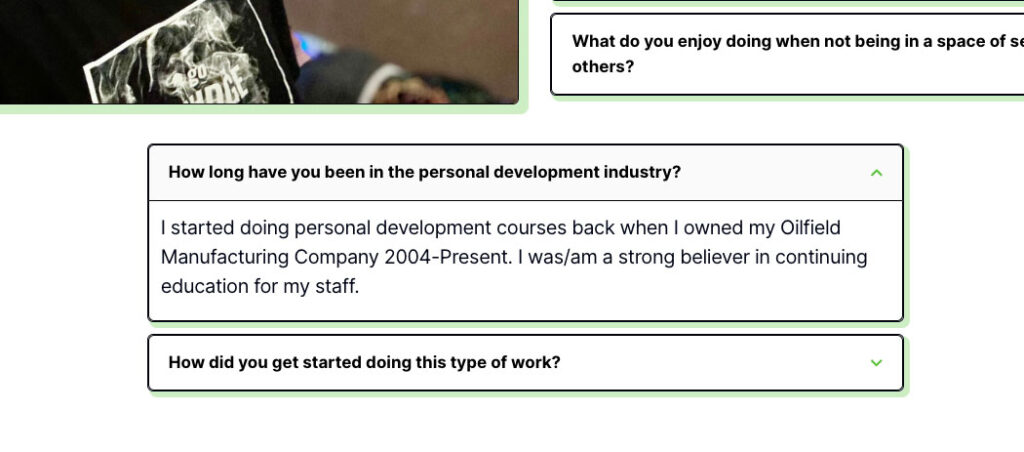
This means that the calls you receive are likely from “pre-sold” customers who have already found the answers they need on your website and are ready to move forward.
5. A website will make your life easier and ultimately save time.
This may seem counterintuitive since some maintenance is still required, but again, if your web designer/developer knows what they’re doing, they should set it up so that regular maintenance won’t require too much effort.
But that’s not what I meant in the context of why a website is important for your business.
My point is that, with a correctly developed website, you could automate or digitize many things. This, in turn, would give you more time for yourself and your business so you could focus on other things that could grow your business.

Example:
One of my clients has an event-type service where he holds several monthly events, and each event may have 50 participants. Before, how he managed the payment and waiver was a bit tedious. During the event, the participants must manually sign a waiver and sometimes pay in person. Which usually takes more than an hour.
Each event takes an hour to “set up,” and with 10 events per month, he’s basically spending 10 hours of work on this.
Beyond that is how the waivers are organized as he has it on paper, which he has a stack load of now.
All of those problems can be solved with a website.
With the way I set up the website, these events can be paid for online, and the waivers can be signed online way before the event even starts. Of course, the waiver forms are also saved and organized digitally. All of that can be done in 5 – 10 minutes.
In short, I saved about 9 hours of his time and effort in managing his events.
6. A website can act as a one-stop shop where you direct your online presence, like social media, advertisements, etc.
An effective website guides your audience from different channels, such as social media, to one central location.
Imagine your website as a physical shop.
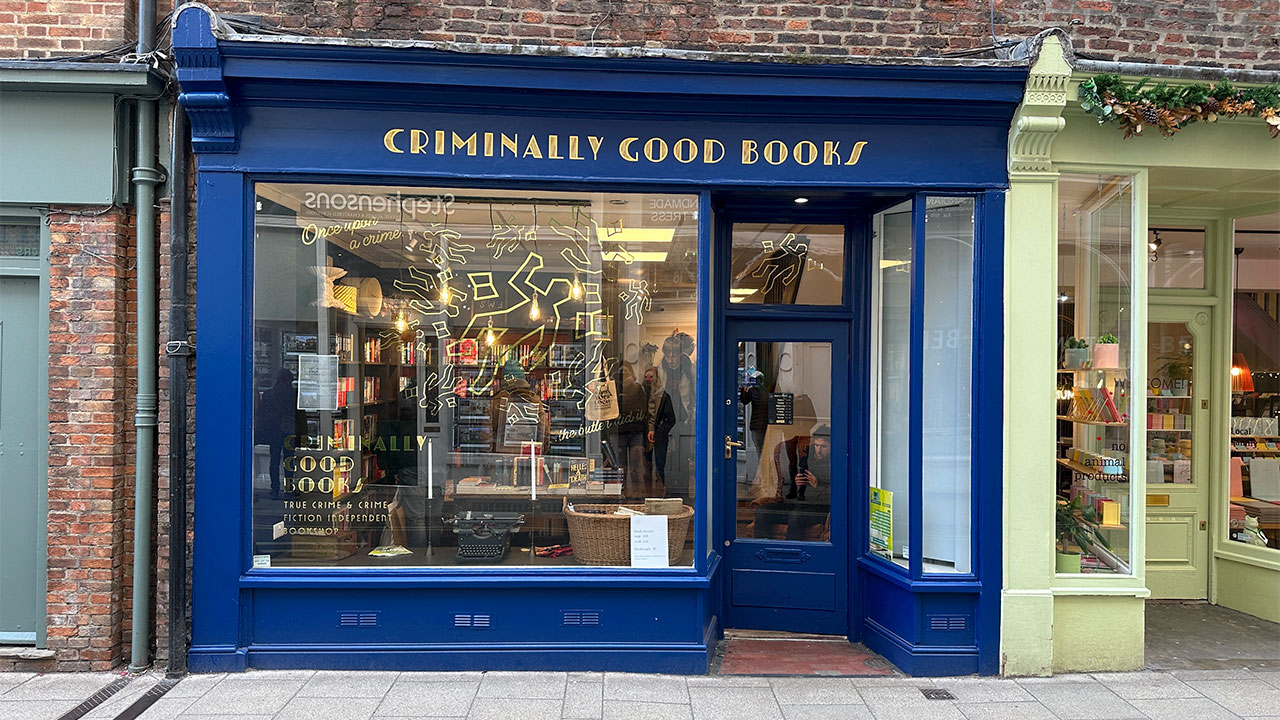
People might discover your business through billboard ads, radio or TV ads, but it’s your shop where they genuinely engage with your business. Without a shop (in this case, a website), potential customers may not take the next step to learn more or make a purchase.
Pro tip: Don’t direct users to your homepage if you run ads. Instead, create a specific landing or sales page relevant to the ad. This approach typically results in a higher conversion rate.
Unlike a social media page, a website allows you to optimize messaging and layout to maximize conversions.
While it may seem like I’m slamming social media, I understand how vital it is for any digital marketing strategy. In fact, I 100% recommend that you build your social media pages.
However, your website should be the final stop on your customer journey, where they can book your services or buy products.
Now, before we move on to the last reason, there’s one runner-up I want to mention.
Bonus! Having a website for your business can also save you money.
Which may seem 100% counterintuitive.
Because, yes, a well-designed website is costly. But remember, a website is an investment, so its goal is to bring in more money.
And it depends on several factors, the main one being what you’re currently paying and whether your developer can build that into your website so you no longer have to pay for an extra service.
That’s why I highly recommend you crunch the numbers and figure out whether you can save money in the long run by hiring a web designer with the ability to develop (yes, web designers are different from web developers).
Here’s an example:
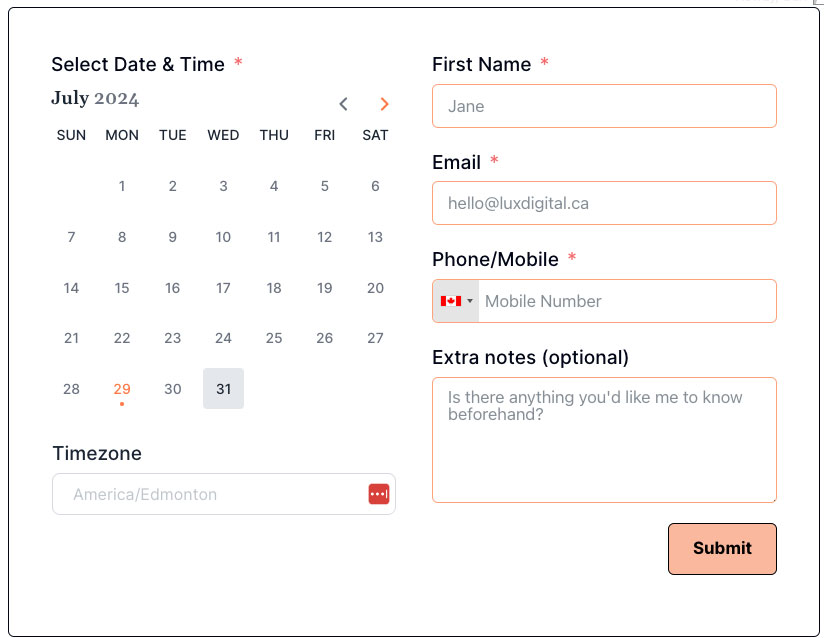
One of my clients was paying for booking software that cost her CA$113 per month, which surprised me. So, with the new website I designed and developed for her business, I implemented a similar booking system that still connects to her Google Calendar.
That means, in five years, I’ve helped her save CA$6,780, which is way less than what I charged her for the new website.
Are you paying for too much on some digital services? Let’s figure out whether you can slash some of your digital expenses.
Book a Meeting Today!7. A website will help your business make more money.
Ultimately, every reason mentioned boils down to one core benefit: a website will help your business make more money.
A well-constructed website is a powerful tool for business growth, whether it’s attracting more potential clients, building trust and credibility, or providing a 24/7 sales presence.
A website is an investment that can yield substantial returns.
In today’s digital age, a website isn’t just a nice-to-have—it’s a necessity. The benefits far outweigh the costs, and the potential for increased revenue is significant.
Even an essential website is better than none. It offers a platform to showcase your business, attract customers, and, ultimately, boost your bottom line.
If you’re serious about growing your business and maximizing your potential, investing in a website is an irrefutable step in the right direction.
There you go! Those are my answers to the age-old question, “why do i need a website?”